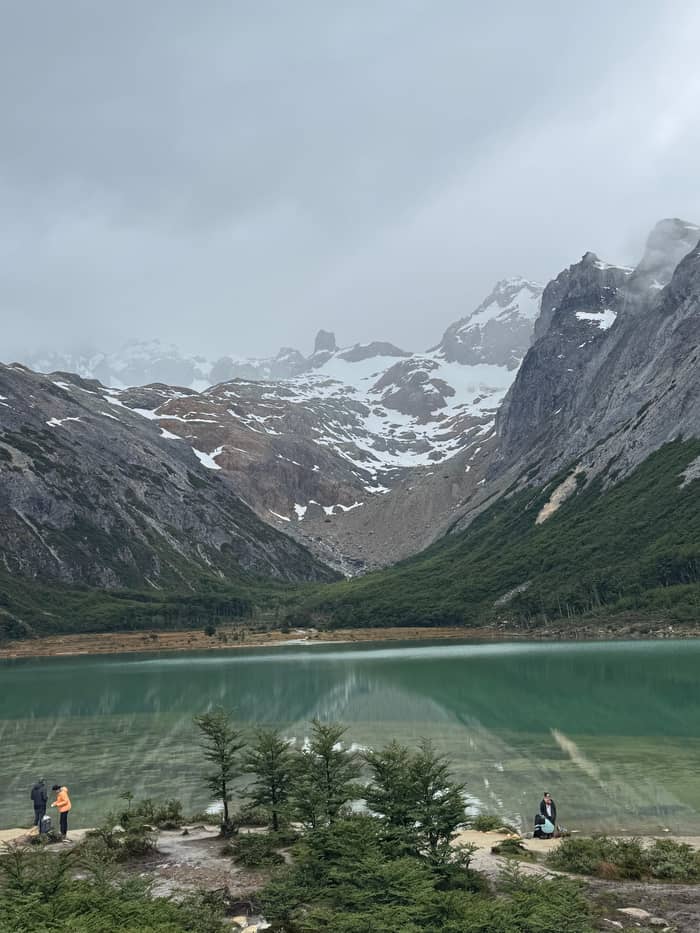
Light layers
Summer pack
Long days, mild air
- FeetWaterproof boots
- TopFleece and shell
- ExtraSunscreen
Interactive tick list
Brief answer
For Laguna Esmeralda trekking wear waterproof boots with a grippy sole, thermal layers under a fleece and rain shell, and pack sunscreen, water, food and a first aid kit.
Kit essentials
Things to do · 9 items
Work through the list and tick items. Progress is saved on this device.
0 / 9 ready
Ready to go. Only the date and the number of hikers are left to choose.
Hold a seatLaguna Esmeralda trekking is won or lost on your feet and your layers. Here is the kit the official pages ask for, what the guided trek lends you and what to rent in town.
Editorial team, lagunaesmeraldatrek.quest · Updated November 9, 2026 · 7 min reading time
Key facts
If you change only one thing in your packing, make it the boots. For summer walks the provincial tourism board advises waterproof trekking shoes or boots with a sole that grips well.1 Its hiking leaflet goes further and describes the ideal pair: waterproof, mid or high cut, a non-slip sole, the right size, with thermal socks, and vaseline or plasters against blisters.5
Operators take this seriously. The trek we book makes trekking boots and mountain clothing a safety condition, with rental for anyone who arrives without. Another lagoon trek states that boots are mandatory and that its guides may refuse walkers in the wrong footwear. Turning up in city trainers is not a style problem here; it can cost you the walk.
Wear the boots in before you fly if they are new, and bring spare socks for the way down. Gaiters are worth their small weight on the bog stretches, where the mud can reach above the ankle. Waterproof trousers do a similar job if you have no gaiters, and they double as a windproof layer at the lagoon when you stop to eat.
Season by season
| Item | Summer | Autumn | Winter |
|---|---|---|---|
| Footwear | Waterproof boots1 | Waterproof boots8 | Boots are essential15 |
| Layers | Thermal base and fleece2 | Add a warm jacket2 | Gloves, scarf, beanie15 |
| Sun | Sunscreen over SPF 303 | Sunscreen over SPF 303 | UV sunglasses15 |
| Traction | Poles | Poles | Crampons if needed |
| Light | Long days16 | Shorter days17 | Only 7 hours18 |
Kit as the province and the trek record describe it; check the forecast the night before.6
The island has a subpolar climate, as the province puts it, and the weather here does not hold one mood for long.9 Its clothing advice is built around that: wear several layers rather than one heavy coat, and treat waterproof clothing and footwear as essential against rain and snow.10 A sunny start at the car park says little about the sky at the water later on.
The province spells out the layers too: thermal shirts, tights and socks under a sweatshirt or fleece, with a warm jacket over the top.2 On the climb you will shed the outer layers; at the lagoon, during an hour of lunch on our trek, you will want all of them back on. Pack them where you can reach them without unpacking lunch.
Summer is mild rather than warm. Temperatures rarely pass 25 °C, and the summer average sits between 10 and 15 °C, according to the provincial climate page.11 Choose quick-drying fabrics over cotton, keep a hat and thin gloves in the pack in January as well as July, and expect to be both too hot and too cold on the same afternoon.
Do not leave the sunscreen behind on a cloudy morning. The province recommends a sun protection factor above 30 in summer and in winter, citing UV radiation linked to the ozone hole that reaches the southern tip of Patagonia.3 At the lagoon, light reflects off water and, in season, off snow, so sunglasses belong in the pack as well.
Rain gear needs to be real rain gear. A jacket with a hood and taped seams, and waterproof trousers, will keep you comfortable through a shower on the bog. The trek we book runs rain or shine, so a wet forecast does not cancel your day; it changes what you wear. Ponchos flap in the wind and catch on branches in the forest section.
Wind is the cold you feel most at the water. The lagoon sits in an open bowl below the peaks, and the province describes how quickly sun can give way to wind, rain or cloud.6 A light windproof shell over a fleece does more than a thick sweater on its own, and a buff or scarf for the neck is worth its few grams.
Your packing question
Find the situation you are in and see what to pack or rent for the trail.
If I only packed city trainers
Rent boots in town
The tourism office lists rental shops; the trek rents boots too.4
If I am travelling with carry-on only
Rent the rain gear
Waterproof clothing can be rented through the trek we book.
If We go in July or August
Pack full winter kit
Heaviest snow and only 7 hours of daylight in those months.18
If I am hiking on my own
Carry the full daypack
First aid, whistle, torch, thermal blanket, map, food and water.19
If I burn easily
Sunscreen above SPF 30
The province advises it in every season because of strong UV.3
A pack per season
Light layers
Long days, mild air
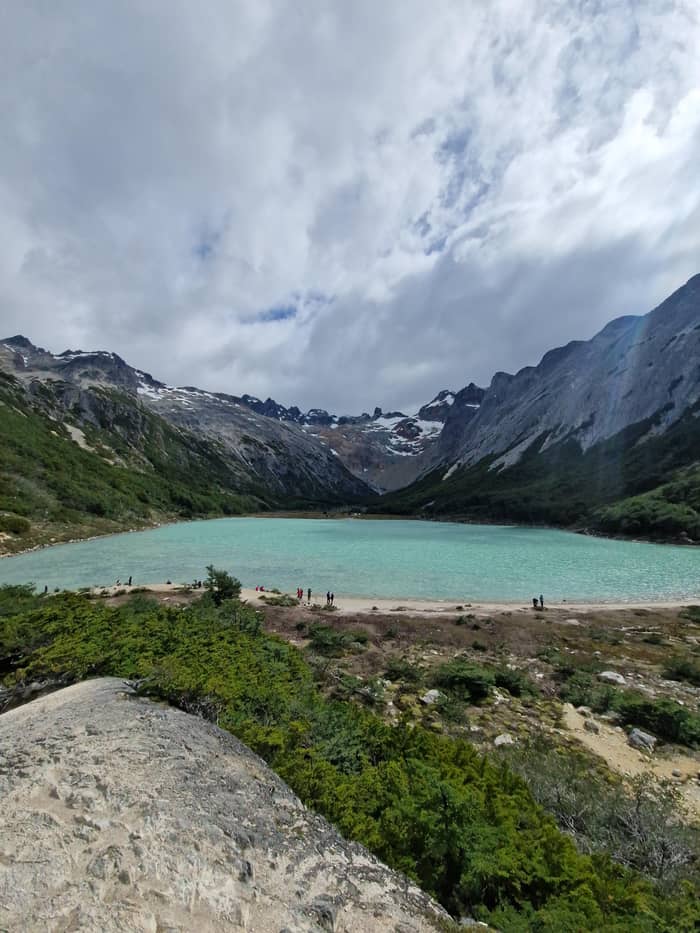
Warmer layers
Colour and frost
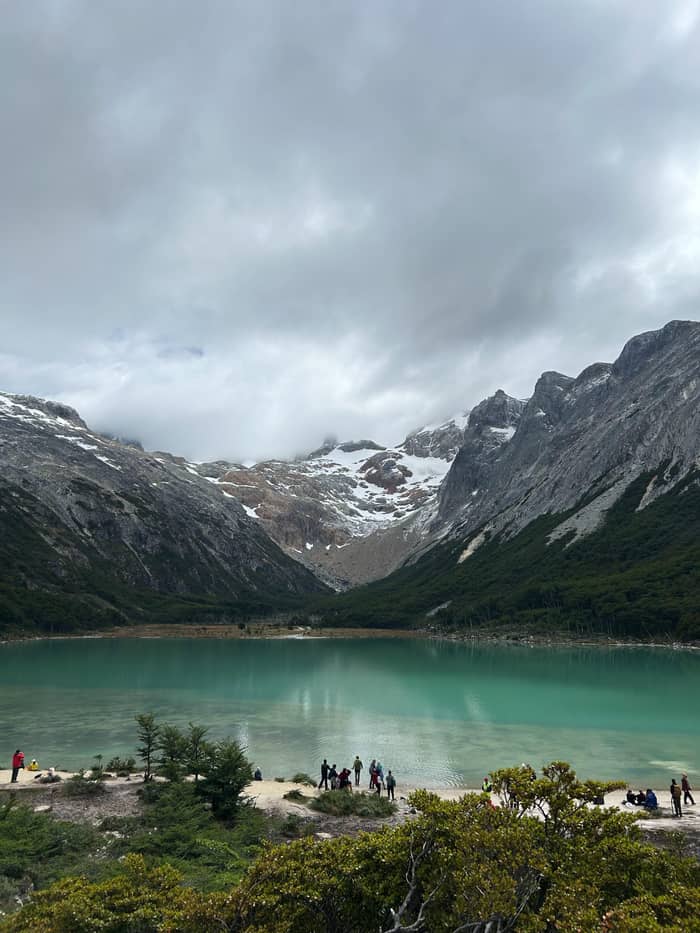
Full winter kit
Snow and ice
Part of the kit list is covered when you book the trek on this site. Before the walk, every guest receives trekking poles, crampons when the ground needs them and a box lunch, and the lunch stop at the water comes with a cup of tea or coffee. That leaves you to bring boots, clothes, water and personal items.
For travelers passing through Ushuaia with light luggage, the rental option matters. The trek lets you rent boots and mountain clothing, and waterproof clothing is available to rent too. Ask about sizes when you book, give your shoe size early, and allow a few minutes at pickup to change into the rented boots.
The guides also carry knowledge you cannot pack. The trek record names guides in Spanish and English, and guests give the guide 4.8 in their ratings. On a muddy stretch, a word about where to step is worth as much as a good sole, and a guide can tell you when to put the crampons on and when to leave them in the bag.
Dressing for the day
Car park
Start warm; the weather can turn suddenly.6
Forest
Lenga forest shelters the first part of the walk.7
Peat bog
Wet, slippery ground for long stretches.8
At the lagoon
An hour of lunch in an open, windy bowl.
Descent
The same path down; poles help on mud.
For anyone hiking to Laguna Esmeralda on their own, the provincial leaflet sorts the daypack into groups: medical basics (a first aid kit and an emergency thermal blanket), safety tools (whistle, knife, a torch with charged batteries, compass or GPS, a map or route app), comfort items (spare clothes, sunglasses, sunscreen), a bag for rubbish, and food and water.19 It is a long list, and every item earns its place on a mountain day.
The municipal mountain leaflet adds practical touches: carry an extra pair of socks and a first aid kit, but only what you know how to use.21 It also recommends a VHF radio, since mobile phones do not work everywhere.22 A charged phone with an offline map and the emergency numbers saved is the minimum; a power bank keeps it alive for the photos at the top.
Hot drinks need planning on a solo day. The city says lighting fires on the trails is forbidden and allows only a heater, meaning a camping stove.24 A flask of tea from your hotel is simpler. Pack food that survives being squashed, and carry everything back out with you, including peel and wrappers.22 Empanadas, nuts, chocolate and a sandwich travel well, and a sweet snack for the way down helps tired legs on the last muddy stretch.
Video
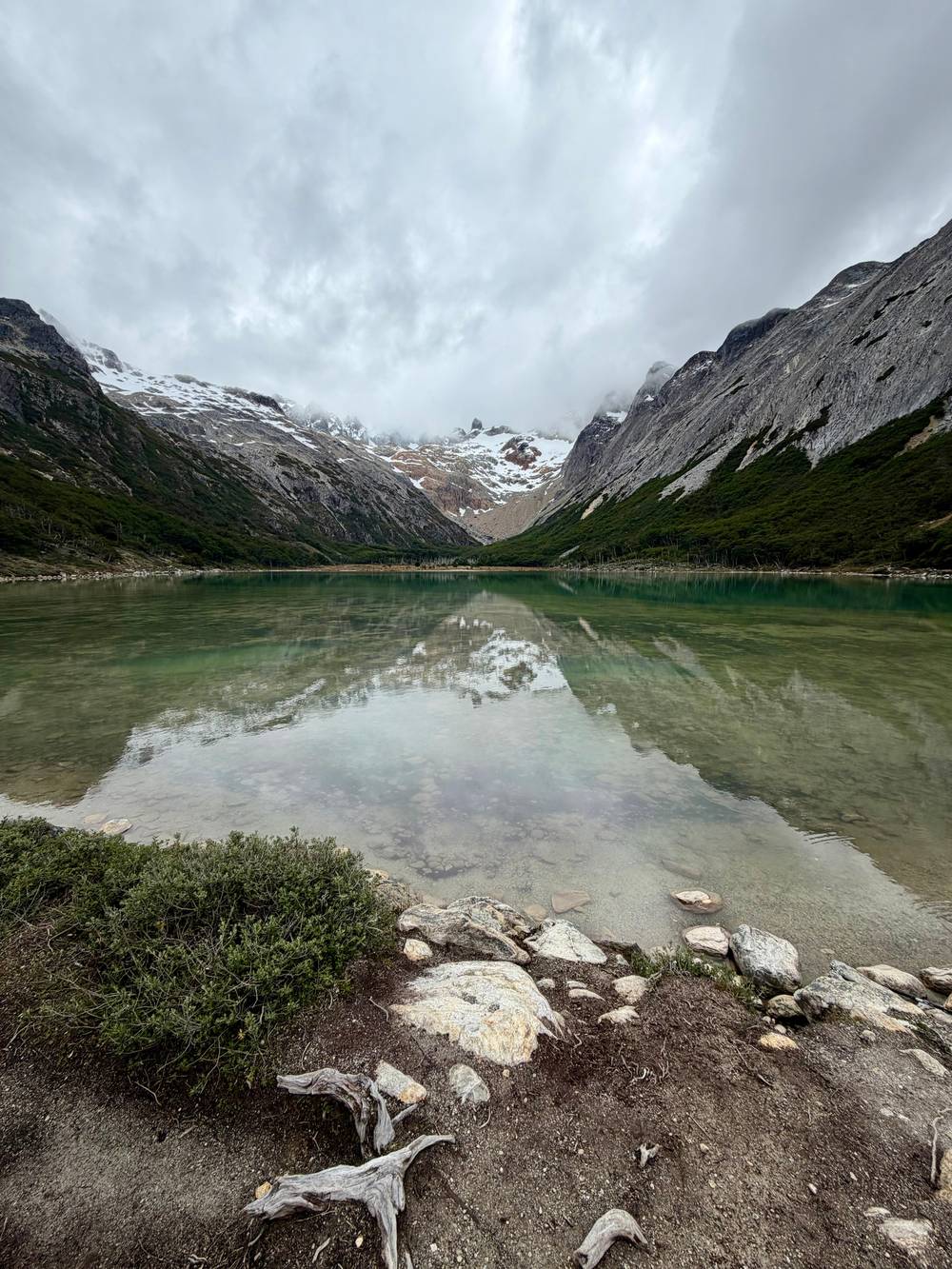
BackpackingTV on YouTube · Nothing is fetched until you hit play.
The terrain in the forests and valleys is difficult, and peatbogs, roots and sharp stones can cause serious accidents if you do not have the appropriate footwear.
From June to October Ushuaia lives with snow, its tourism office says, and the trail changes with it.25 The province calls boots absolutely essential in winter, and lists gloves, a scarf, a beanie and UV-blocking sunglasses alongside them.15 Add warmer base layers and spare gloves, since wet gloves stay wet at these temperatures.
Winter averages on the island range from 1 to 6 °C, the province says, and polar air can push them below zero.13 July and August bring the heaviest snowfalls of the year, and a winter day carries just 7 hours of light.18 That means a headlamp in the pack even for a morning walk, and a thermal flask instead of a cold water bottle.
Traction is the winter difference. The guided trek includes crampons, issued whenever conditions call for them. Walkers without a guide should not improvise on icy boards and frozen mud; the province asks for proper gear and footwear for icy or snowy trails in the cold seasons.17 Our winter page covers the frozen lagoon and snowshoe walks in full.
You do not need to fly in with a full hiking wardrobe. The Ushuaia tourism office lists rental shops across the centre, among them shops on Gobernador Deloqui and on San Martin.4 Its winter advice adds that visitors without warm clothing can rent it for as long as they need.23 Rent the evening before, so the morning pickup is not a rush.
The trail rules are part of what you pack, too. The province asks hikers not to bring pets or play music on the path, as many walkers use it all year.26 The municipal leaflet asks you to pack out all your rubbish and to leave pets at home, as they scare off native wildlife.22 Leave the portable speaker in the hotel.
A small bag for muddy boots and wet clothes keeps the van and your hotel room clean on the way back. A dry set of clothes in the vehicle, or waiting at the hotel, is a welcome sight at the end of the day. Then hang the boots somewhere warm and stuff them with newspaper overnight: on a longer stay, the next outing starts with them, and wet boots on a cold morning are no fun at all.
FAQ
The province advises waterproof trekking boots with a sole that grips; our trek requires boots.1
The tourism office lists rental shops, and the trek lets you rent boots and clothing.4
Poles are handed out to every guest before the walk on the trek we book.
Summer averages sit between 10 and 15 °C and rarely pass 25 °C, says the province.11
The province advises a factor above 30 in summer and winter because of strong UV.3
The provincial list adds a whistle, a torch, a thermal blanket and a map or GPS app.19
Fires are forbidden on the trails; only a stove-type heater is allowed.24
Sources
Read on
Hiking to the green lagoon from Ushuaia? Ask a real person here.